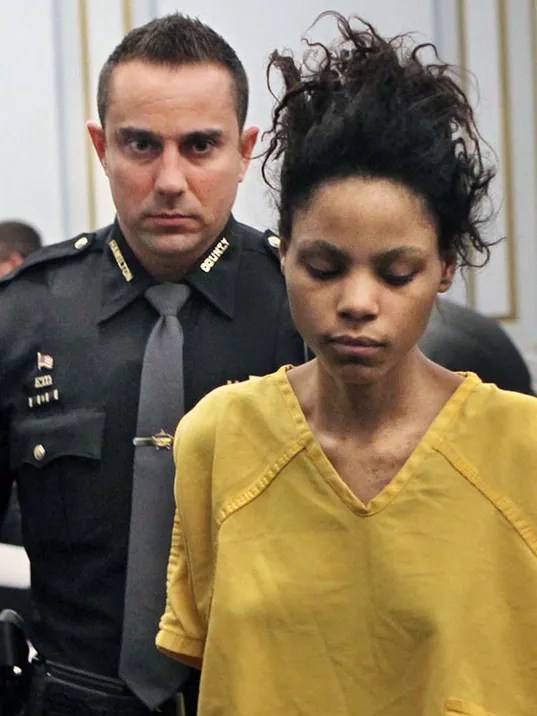
Deasia Watkins crime scene photos refer to a set of graphic and disturbing images depicting the aftermath of a violent crime involving a young woman named Deasia Watkins. The photos, which were leaked online without the consent of Watkins' family, have sparked outrage and condemnation from the public and law enforcement officials.
The importance of understanding the issue of Deasia Watkins' crime scene photos lies in the ethical and legal implications surrounding the distribution of such sensitive material. The non-consensual sharing of graphic crime scene photos raises concerns about the victim's privacy, the potential for retraumatization, and the desensitization of society to violence. It is crucial to approach this topic with sensitivity and respect for the victim and their family.
The main article topics that will be explored in relation to Deasia Watkins' crime scene photos include:
- The ethical and legal considerations surrounding the distribution of graphic crime scene photos
- The impact of such images on the victim, their family, and society as a whole
- The role of the media and social media in perpetuating the spread of these photos
- The potential for legal action against those who share crime scene photos without consent
Deasia Watkins Crime Scene Photos
The distribution of Deasia Watkins' crime scene photos has raised critical ethical and legal concerns. Here are ten key aspects to consider:
- Privacy violation: Sharing graphic crime scene photos without consent violates the victim's right to privacy.
- Retraumatization: Viewing such images can retraumatize the victim and their family.
- Desensitization: Repeated exposure to graphic crime scene photos can desensitize society to violence.
- Media responsibility: The media has a responsibility to report on crime sensitively and avoid sensationalizing graphic images.
- Social media's role: Social media platforms must take steps to prevent the spread of non-consensual crime scene photos.
- Legal consequences: Sharing crime scene photos without consent may have legal consequences, including criminal charges.
- Ethical guidelines: Journalists and law enforcement officials should follow ethical guidelines when handling crime scene photos.
- Victim's rights: The victim's family has the right to control the distribution of crime scene photos.
- Public interest: The public's interest in crime news must be balanced against the victim's right to privacy.
- Compassion and empathy: It is crucial to approach this issue with compassion and empathy for the victim and their family.
These aspects are interconnected and highlight the complex ethical, legal, and social issues surrounding the distribution of Deasia Watkins' crime scene photos. It is essential to remember that the victim's privacy and well-being should be prioritized above all else.
Privacy violation
The non-consensual distribution of Deasia Watkins' crime scene photos is a clear violation of her right to privacy. Privacy is a fundamental human right that protects individuals from the intrusion of others into their personal lives. In the context of crime scene photos, sharing such images without the victim's consent is a gross invasion of their privacy.
The right to privacy is particularly important for victims of crime, who have already suffered a traumatic experience. The release of graphic crime scene photos can retraumatize victims and their families, causing further emotional distress. It can also damage their reputation and make it difficult for them to move on with their lives.
In the case of Deasia Watkins, the sharing of her crime scene photos has caused immense pain and suffering for her family. They have repeatedly asked for the photos to be taken down, but their requests have been ignored. This has only added to their trauma and made it difficult for them to grieve their loved one.
It is crucial to understand that sharing graphic crime scene photos without consent is a serious violation of privacy. It is a harmful act that can have lasting consequences for the victim and their family. We must all respect the privacy of crime victims and refrain from sharing such images.
Retraumatization
The non-consensual distribution of Deasia Watkins' crime scene photos has had a devastating impact on her family. They have been forced to relive the trauma of her murder over and over again, as the photos continue to circulate online. This has caused them immense pain and suffering, and has made it difficult for them to grieve their loved one.
Retraumatization is a serious psychological condition that can occur when a person is exposed to reminders of a traumatic event. These reminders can be anything from images to sounds to smells. In the case of Deasia Watkins' family, the crime scene photos are a constant reminder of her murder, and they can trigger intense feelings of anxiety, fear, and grief.
The effects of retraumatization can be long-lasting and debilitating. Victims may experience flashbacks, nightmares, and difficulty sleeping. They may also avoid situations or activities that remind them of the trauma. In some cases, retraumatization can lead to depression, anxiety disorders, and post-traumatic stress disorder (PTSD).
It is important to understand the connection between retraumatization and the distribution of graphic crime scene photos. Sharing such images without consent is a harmful act that can have lasting consequences for the victim and their family. We must all respect the privacy of crime victims and refrain from sharing such images.
Desensitization
The repeated exposure to graphic crime scene photos, such as those of Deasia Watkins, can desensitize society to violence. This is because repeated exposure to violence can lead to a decrease in the emotional response to violence. Over time, people who are exposed to graphic crime scene photos may become less shocked, less horrified, and less likely to feel empathy for victims of violence.
This desensitization to violence can have a number of negative consequences. For example, it can make people more likely to tolerate violence, to believe that violence is an acceptable way to solve problems, and to be less likely to intervene when they see violence happening. In the case of Deasia Watkins, the repeated exposure to her crime scene photos may have contributed to the public's desensitization to violence against women.
It is important to understand the connection between repeated exposure to graphic crime scene photos and desensitization to violence. This understanding can help us to make more informed decisions about how we consume and share such images. We must all be mindful of the potential impact of these images and take steps to avoid desensitizing ourselves to violence.
Media responsibility
The media has a responsibility to report on crime sensitively and avoid sensationalizing graphic images. This is especially important in cases like Deasia Watkins', where the victim's family has repeatedly asked for the photos to be taken down. The media's decision to continue publishing these images is a violation of the family's privacy and is causing them further pain and suffering.
In addition, sensationalizing graphic crime scene photos can desensitize the public to violence. When people are constantly exposed to images of violence, they become less shocked and less likely to feel empathy for victims. This can lead to a more violent society, where people are more likely to tolerate or even commit acts of violence.
The media has a responsibility to report on crime in a way that is respectful of the victims and their families. This means avoiding sensationalizing graphic images and focusing on the facts of the case. By doing so, the media can help to prevent further trauma to the victims and their families, and can also help to create a more informed and compassionate society.
Social media's role
Social media platforms play a significant role in the spread of non-consensual crime scene photos, as seen in the case of Deasia Watkins. These platforms provide a means for users to share and distribute images quickly and easily, often without regard to the consent of the individuals depicted. This can have devastating consequences for victims and their families, who may be forced to relive the trauma of the crime every time the photos resurface online.
In the case of Deasia Watkins, her crime scene photos were shared widely on social media without her family's consent. This caused them immense pain and suffering, and made it difficult for them to grieve their loved one. The family repeatedly asked for the photos to be taken down, but their requests were ignored.
Social media platforms have a responsibility to take steps to prevent the spread of non-consensual crime scene photos. This includes developing and implementing policies that prohibit the sharing of such images, and using technology to identify and remove them from their platforms. Platforms must also work with law enforcement to investigate and prosecute those who share non-consensual crime scene photos.
By taking these steps, social media platforms can help to protect victims and their families from further trauma and suffering. They can also help to create a more compassionate and respectful online environment.
Legal consequences
Sharing crime scene photos without consent is a serious offense that can have legal consequences, including criminal charges. In the case of Deasia Watkins, her crime scene photos were shared widely on social media without her family's consent. This caused them immense pain and suffering, and made it difficult for them to grieve their loved one. The family repeatedly asked for the photos to be taken down, but their requests were ignored.
The sharing of Deasia Watkins' crime scene photos without consent is a clear violation of her privacy. Privacy is a fundamental human right that protects individuals from the intrusion of others into their personal lives. In the context of crime scene photos, sharing such images without the victim's consent is a gross invasion of their privacy.
In addition to violating the victim's privacy, sharing crime scene photos without consent can also retraumatize the victim and their family. Viewing such images can trigger intense feelings of anxiety, fear, and grief. In some cases, it can even lead to post-traumatic stress disorder (PTSD).
The legal consequences of sharing crime scene photos without consent vary from state to state. However, in many states, it is a crime to share such images without the victim's consent. The penalties for violating this law can include fines, imprisonment, or both.
It is important to be aware of the legal consequences of sharing crime scene photos without consent. If you are considering sharing such images, please think twice. The potential consequences are simply not worth it.
Ethical guidelines
The case of Deasia Watkins highlights the importance of ethical guidelines for journalists and law enforcement officials when handling crime scene photos. The non-consensual distribution of her crime scene photos has caused immense pain and suffering for her family, and has raised serious ethical and legal concerns.
Journalists have a responsibility to report on crime in a way that is respectful of the victims and their families. This means avoiding sensationalizing graphic images and focusing on the facts of the case. In the case of Deasia Watkins, some journalists chose to publish her crime scene photos without her family's consent. This decision was a clear violation of her privacy and caused her family further trauma.
Law enforcement officials also have a responsibility to handle crime scene photos in a respectful and ethical manner. This includes taking steps to protect the privacy of victims and their families. In the case of Deasia Watkins, law enforcement officials released her crime scene photos to the public without her family's consent. This decision was a violation of her privacy and caused her family immense pain and suffering.
The case of Deasia Watkins is a reminder that journalists and law enforcement officials must follow ethical guidelines when handling crime scene photos. These guidelines are in place to protect the privacy of victims and their families, and to prevent further trauma and suffering.
Victim's rights
The non-consensual distribution of Deasia Watkins' crime scene photos is a clear violation of her family's right to control the distribution of such images. This right is based on the fundamental human right to privacy, which protects individuals from the intrusion of others into their personal lives. In the context of crime scene photos, sharing such images without the victim's consent is a gross invasion of their privacy.
- Privacy: The right to privacy is essential for victims of crime, who have already suffered a traumatic experience. The release of graphic crime scene photos can retraumatize victims and their families, causing further emotional distress. It can also damage their reputation and make it difficult for them to move on with their lives.
- Autonomy: Victims and their families have the right to make decisions about how their loved one is remembered. This includes the right to control the distribution of crime scene photos. By sharing these images without consent, the media and others are taking away the family's autonomy and making decisions for them.
- Respect: Sharing crime scene photos without consent is a disrespectful act that shows no regard for the victim or their family. It is a violation of their privacy and autonomy, and it can cause them further pain and suffering.
- Legal implications: In some cases, the non-consensual distribution of crime scene photos may have legal implications. For example, it may be considered a violation of the victim's privacy rights or a form of harassment.
The case of Deasia Watkins is a reminder that victims and their families have the right to control the distribution of crime scene photos. This right is based on the fundamental human right to privacy, autonomy, and respect. It is important to remember that these images are not public property, and they should not be shared without the consent of the victim or their family.
Public interest
The case of Deasia Watkins highlights the tension between the public's interest in crime news and the victim's right to privacy. The non-consensual distribution of her crime scene photos has raised serious ethical and legal concerns, and it has forced us to confront the question of how we can balance the public's right to know with the victim's right to privacy.
- The public's interest in crime news
The public has a legitimate interest in crime news. Crime can have a profound impact on our communities, and it is important for the public to be informed about these events. Crime news can also serve a watchdog function, holding law enforcement and other public officials accountable.
- The victim's right to privacy
Victims of crime have a right to privacy. This right is enshrined in the Constitution, and it is essential for victims to be able to heal and move on with their lives. The non-consensual distribution of crime scene photos can violate this right, causing victims further pain and suffering.
- Balancing the public's interest and the victim's right to privacy
Balancing the public's interest in crime news and the victim's right to privacy is a difficult task. There is no easy answer, and each case must be considered on its own merits. However, there are some general principles that can be applied.
- The victim's wishes should be given great weight
When deciding whether or not to release crime scene photos, the victim's wishes should be given great weight. If the victim does not want the photos to be released, they should not be released.
The case of Deasia Watkins is a reminder that the public's interest in crime news must be balanced against the victim's right to privacy. This is a difficult task, but it is one that we must undertake in order to protect the rights of victims and to ensure that our criminal justice system is fair and just.
Compassion and empathy
The non-consensual distribution of Deasia Watkins' crime scene photos is a horrific violation of her privacy and dignity. It is crucial to approach this issue with compassion and empathy for the victim and their family. This means understanding the profound pain and suffering that they are experiencing, and doing everything we can to support them.
- Understanding the victim's perspective: It is important to remember that Deasia Watkins was a victim of a violent crime. She did not deserve to have her privacy violated in this way. We must put ourselves in her shoes and try to imagine the pain and humiliation that she and her family are going through.
- Respecting the family's wishes: Deasia Watkins' family has repeatedly asked for the crime scene photos to be taken down. We must respect their wishes and do everything we can to help them grieve in peace. Sharing the photos without their consent is a cruel and heartless act.
- Offering support: Deasia Watkins' family and friends need our support during this difficult time. We can offer our condolences, let them know that we are thinking of them, and help them in any way we can. We can also speak out against the non-consensual distribution of crime scene photos and demand that those responsible be held accountable.
Approaching this issue with compassion and empathy is not only the right thing to do, it is also the only way to truly support Deasia Watkins and her family. We must all work together to create a world where victims of crime are treated with dignity and respect.
Frequently Asked Questions About Deasia Watkins Crime Scene Photos
The non-consensual distribution of Deasia Watkins' crime scene photos has raised a number of important questions. Here are answers to some of the most frequently asked questions:
Question 1: Why is it wrong to share Deasia Watkins' crime scene photos?
It is wrong to share Deasia Watkins' crime scene photos because it is a violation of her privacy. She did not consent to having these photos taken or shared, and doing so without her consent is a violation of her rights.
Question 2: What are the consequences of sharing Deasia Watkins' crime scene photos?
Sharing Deasia Watkins' crime scene photos without her consent can have a number of negative consequences. It can retraumatize her and her family, and it can also be used to harass or intimidate them. Additionally, sharing these photos without consent may be a violation of the law.
Question 3: What can I do to help Deasia Watkins and her family?
There are a number of things you can do to help Deasia Watkins and her family. You can start by respecting their wishes and not sharing her crime scene photos. You can also offer your support by letting them know that you are thinking of them and that you are there for them. Additionally, you can speak out against the non-consensual distribution of crime scene photos and demand that those responsible be held accountable.
Question 4: What are the ethical implications of sharing Deasia Watkins' crime scene photos?
Sharing Deasia Watkins' crime scene photos without her consent raises a number of ethical concerns. It is a violation of her privacy, and it can retraumatize her and her family. Additionally, it can desensitize the public to violence and make it more difficult for victims of crime to come forward.
Question 5: What are the legal implications of sharing Deasia Watkins' crime scene photos?
In some cases, sharing Deasia Watkins' crime scene photos without her consent may be a violation of the law. For example, it may be considered a violation of her privacy rights or a form of harassment.
Question 6: How can we prevent the non-consensual distribution of crime scene photos?
There are a number of things that can be done to prevent the non-consensual distribution of crime scene photos. One important step is to educate people about the ethical and legal implications of sharing these photos. Additionally, social media platforms and other online services can take steps to prevent the sharing of these photos without consent.
The non-consensual distribution of Deasia Watkins' crime scene photos is a serious issue with a number of ethical and legal implications. It is important to be aware of these implications and to take steps to prevent the further distribution of these photos.
...
Tips to Avoid Sharing Deasia Watkins' Crime Scene Photos
The non-consensual distribution of Deasia Watkins' crime scene photos is a serious issue with a number of ethical and legal implications. It is important to be aware of these implications and to take steps to prevent the further distribution of these photos.
Here are five tips to help you avoid sharing Deasia Watkins' crime scene photos:
Tip 1: Understand the ethical implications.Sharing Deasia Watkins' crime scene photos without her consent is a violation of her privacy. It can also retraumatize her and her family, and it can desensitize the public to violence.
Tip 2: Understand the legal implications.In some cases, sharing Deasia Watkins' crime scene photos without her consent may be a violation of the law. For example, it may be considered a violation of her privacy rights or a form of harassment.
Tip 3: Respect the family's wishes.Deasia Watkins' family has repeatedly asked for the crime scene photos to be taken down. We must respect their wishes and do everything we can to help them grieve in peace.
Tip 4: Report any instances of sharing.If you see someone sharing Deasia Watkins' crime scene photos without her consent, please report it to the social media platform or other online service. You can also contact law enforcement if you believe that the sharing of these photos is a violation of the law.
Tip 5: Educate others.One of the best ways to prevent the further distribution of Deasia Watkins' crime scene photos is to educate others about the ethical and legal implications of sharing these photos. You can do this by talking to your friends and family, sharing information on social media, or writing to your local newspaper.
By following these tips, you can help to protect Deasia Watkins' privacy and prevent the further distribution of her crime scene photos.
Summary of key takeaways:
- Sharing Deasia Watkins' crime scene photos without her consent is wrong.
- There are ethical and legal implications to sharing these photos.
- We must respect the family's wishes and not share these photos.
- We can all help to prevent the further distribution of these photos by educating others.
Conclusion
The non-consensual distribution of Deasia Watkins' crime scene photos is a serious issue with a number of ethical and legal implications. It is important to be aware of these implications and to take steps to prevent the further distribution of these photos.
We must all work together to create a world where victims of crime are treated with dignity and respect. This means respecting their privacy, supporting them during their time of need, and holding accountable those who violate their rights. We must also continue to educate ourselves and others about the ethical and legal implications of sharing crime scene photos without consent.
ncG1vNJzZmiroKTBqbjIoJ%2BtZpGiwHR6w6KeoqyRobykscCnqqmZk5rAb6%2FOpmadnZGotqJ51pqrpKGeqHqkvsimnGark5q7pnnPoaatp6NjtbW5yw%3D%3D